

No images found.
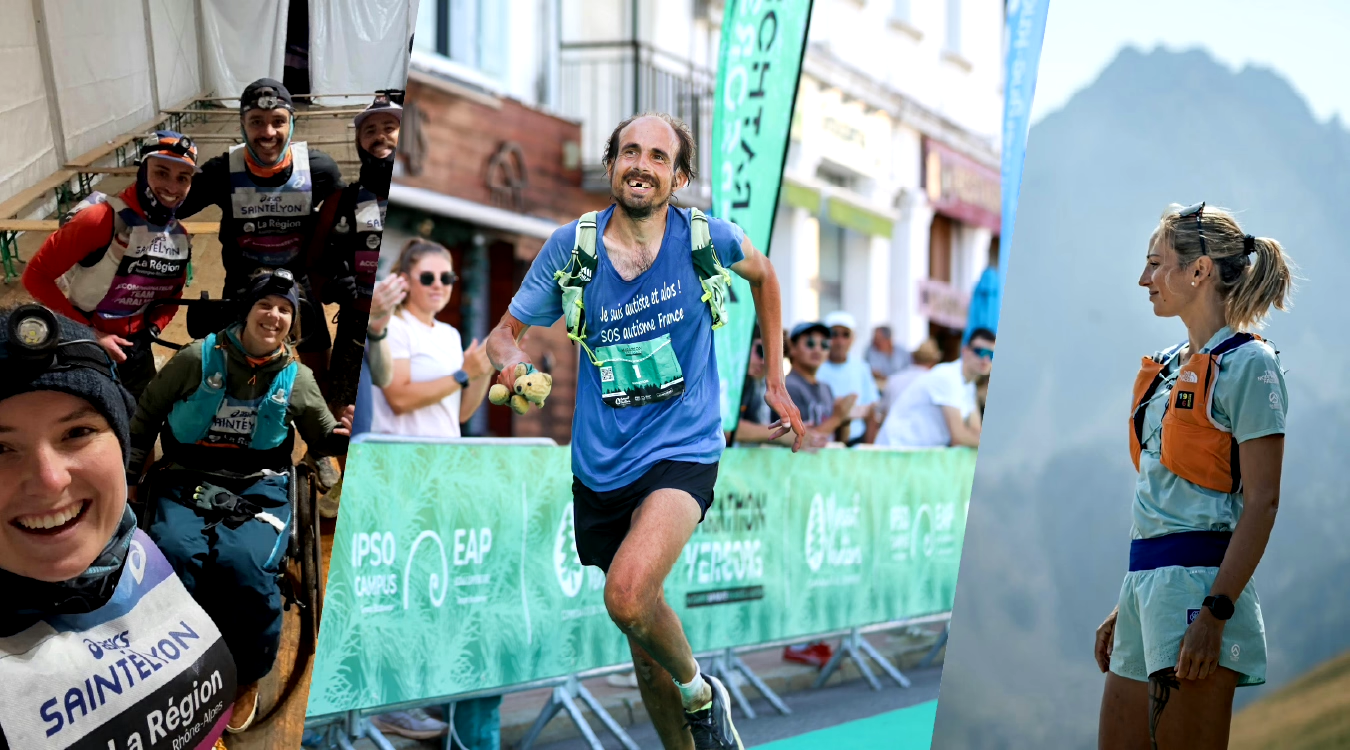
This weekend, the 72nd edition of the ASICS SaintéLyon links Saint-Étienne to Lyon. In the pack, one team stands out from the rest: Team Paralight. Around fifteen athletes with visible or invisible disabilities are here to remind us that trail running's most legendary night belongs to everyone.
The ASICS SaintéLyon organization launched Team Paralight in 2024. Its initial idea: to use a challenge as demanding as the SaintéLyon to raise awareness about disability, whether visible or not. Each year, about fifteen runners take part: those with spinal cord injuries, amputees, the visually impaired, autistic individuals, or those with disabilities that are not immediately apparent.
For its third edition, the team covers the full range of formats, from the SaintéSprint to the 160 km LyonSaintéLyon. We met with some of its members before the start.
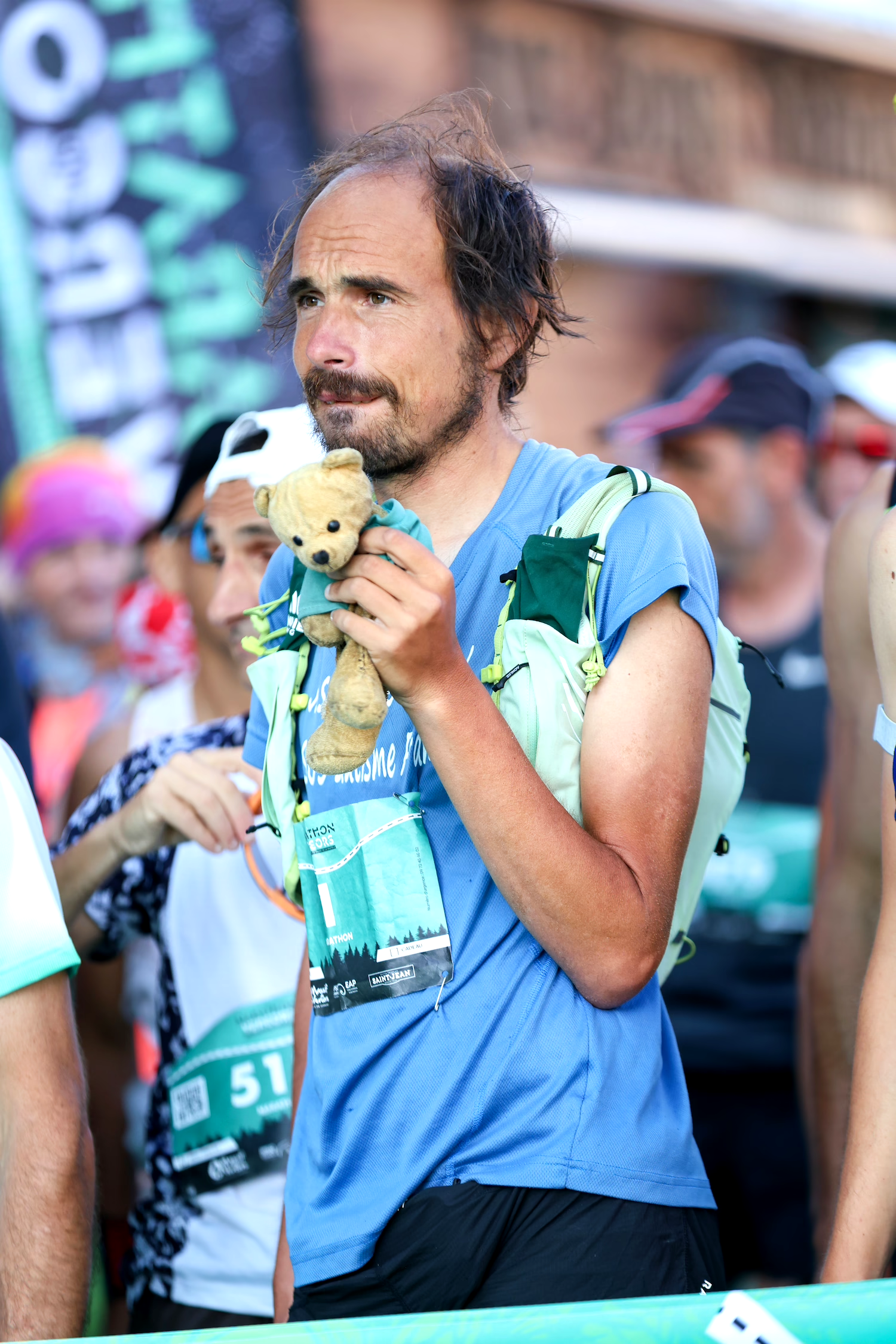
For Franck Derrien, running erases boundaries. "We live in a very difficult world. In running, there are no rich or poor, white or black, disabled or non-disabled people: we are all here to enjoy life for a weekend and put our worries aside." In the running community, he feels he belongs: "I am no longer judged by my disability."
On the trails, a companion never leaves his side: Teddy, a teddy bear from his childhood. Franck photographs him everywhere, from races to mountains, and shares these images on his social media (franckderrien1306 on Instagram). "It’s to show that you can do things despite a disability. I was born with it, and I will die with it."
He arrives in Saint-Étienne with an impressive figure in mind: 228 km, covered three weeks ago during a backyard ultra where he finished third. "I am proud of my performance from a purely sporting perspective, and I met some wonderful people." The format also taught him something about himself. "In a backyard race, you never know exactly when you have to stop, unlike a classic race where everything ends at the finish line. You have to know how to be resilient and truly listen to your body."
There is no question, however, of approaching the SaintéLyon as a conqueror. "To be honest, I don't feel very calm. I’m quite apprehensive about the night. It will be dark, it will be cold, and I will have to manage my nutrition and sleep deprivation." He remains optimistic about one thing: he completed his 228 km without a single blister or injury, wearing the same shoes he will wear on Saturday night.
Fanny Barbara runs ultras with only one lung. The UTMB, the Diagonale des Fous… races she never imagined she could even start. "Above all, I learned to know my body, to listen to it, and to trust it. I discovered that my limits were not always where I imagined them to be." She remains attentive to her breathing, fatigue, altitude, and the cold, but refuses to let this condition "define everything I am capable of." Today, she no longer runs just to finish: she wants to improve, and sometimes to perform.
Her fight is for the visibility of invisible disabilities. "When people see me cross a finish line, they can easily forget what lies behind it. Being able to achieve certain things does not mean that the difficulties no longer exist." However, she insists on an essential nuance: "A person with a disability does not need to perform feats to be legitimate, courageous, or worthy of admiration. I especially don't want my story to become an injunction to push oneself beyond all limits."
An oncology nurse, Fanny views physical exertion through the lens of her profession. "In ultra-running, you have to know how to distinguish between the discomfort inherent in the effort and pain that should alert you. I don't want to make suffering a virtue."
This SaintéLyon is her first, as is her adventure with Team Paralight. She was drawn to the "human and collective dimension" of the project. After several mountain ultras, she discovered a taste for flatter formats, with a new opponent to tame: "the cold!"

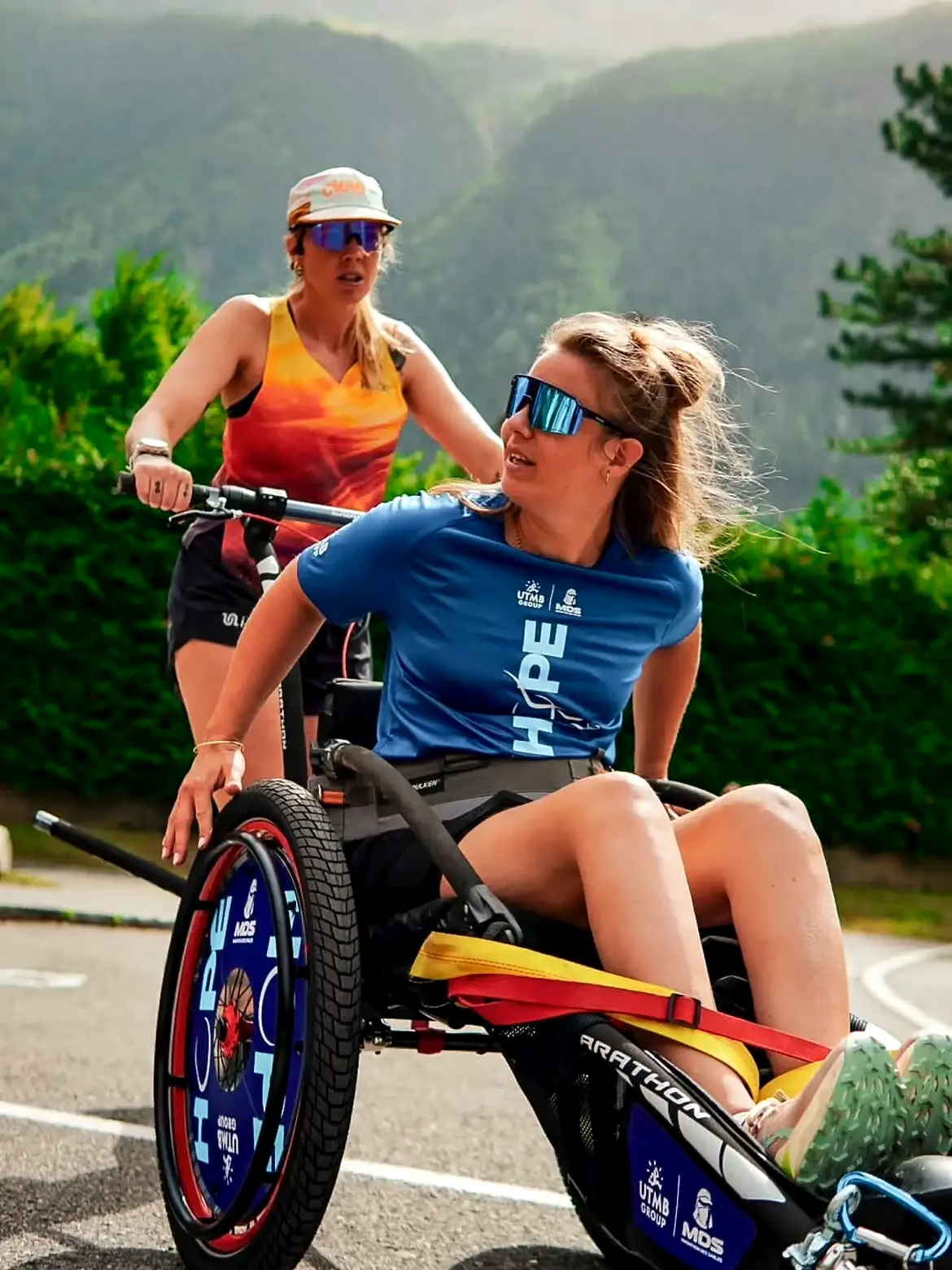
A pastry chef in fine dining, Caroline Fruchaud saw her life change at 25, when an accident left her in a wheelchair. Ultra-running didn't come immediately. She first tested sports considered more "accessible," often indoors to escape the cold and rain. "It’s ironic, knowing that I’m going to run the SaintExpress!"
It was on social media that she discovered ultra-running. "I thought: that seems impossible and completely crazy... I want to do it too, it’s not just for able-bodied people!" After the Marathon des Sables, she went on to do the EcoTrail de Paris and the UTMB relay. "I think that’s what I like about ultra-running: going where I am not expected to be."
For her second SaintExpress, she knows what to expect: paths, mud, rocks, climbs, descents, and even stairs, on a course that was not designed for a wheelchair. "Where a runner will simply adapt their stride, I must constantly adapt my trajectory, my technique, and my way of overcoming obstacles." She can count on experienced friends who run by her side, and a good dose of humor, "because you need it!"
Her loved ones are, in fact, at the heart of her story. "Without them, I really wouldn't do as many things." Sport has given her a new engine and new challenges: "Even though the rules of the game had changed, I could still aim high. Today, I live more strongly and more intensely than before my accident."
The Paralight team doesn't stop there. In the 80km race, Nicolas Lacambre returns a year after his DNF. Franck Greppa and Maud Méry de Montigny are taking on the 160km LyonSaintéLyon. All three will share their race experience from the inside once they cross the finish line.
The LyonSaintéLyon kicks off on Saturday, November 28th at 9 a.m. That same evening, the SaintExpress begins at 11 p.m., followed by the SaintéLyon at 11:30 p.m. See you on the trails to cheer on Team Paralight.
This weekend, the 72nd edition of the ASICS SaintéLyon links Saint-Étienne to Lyon. In the pack, one team stands out from the rest: Team Paralight. Around fifteen athletes with visible or invisible disabilities are here to remind us that trail running's most legendary night belongs to everyone.
The ASICS SaintéLyon organization launched Team Paralight in 2024. Its initial idea: to use a challenge as demanding as the SaintéLyon to raise awareness about disability, whether visible or not. Each year, about fifteen runners take part: those with spinal cord injuries, amputees, the visually impaired, autistic individuals, or those with disabilities that are not immediately apparent.
For its third edition, the team covers the full range of formats, from the SaintéSprint to the 160 km LyonSaintéLyon. We met with some of its members before the start.
For Franck Derrien, running erases boundaries. "We live in a very difficult world. In running, there are no rich or poor, white or black, disabled or non-disabled people: we are all here to enjoy life for a weekend and put our worries aside." In the running community, he feels he belongs: "I am no longer judged by my disability."
On the trails, a companion never leaves his side: Teddy, a teddy bear from his childhood. Franck photographs him everywhere, from races to mountains, and shares these images on his social media (franckderrien1306 on Instagram). "It’s to show that you can do things despite a disability. I was born with it, and I will die with it."
He arrives in Saint-Étienne with an impressive figure in mind: 228 km, covered three weeks ago during a backyard ultra where he finished third. "I am proud of my performance from a purely sporting perspective, and I met some wonderful people." The format also taught him something about himself. "In a backyard race, you never know exactly when you have to stop, unlike a classic race where everything ends at the finish line. You have to know how to be resilient and truly listen to your body."
There is no question, however, of approaching the SaintéLyon as a conqueror. "To be honest, I don't feel very calm. I’m quite apprehensive about the night. It will be dark, it will be cold, and I will have to manage my nutrition and sleep deprivation." He remains optimistic about one thing: he completed his 228 km without a single blister or injury, wearing the same shoes he will wear on Saturday night.
Fanny Barbara runs ultras with only one lung. The UTMB, the Diagonale des Fous… races she never imagined she could even start. "Above all, I learned to know my body, to listen to it, and to trust it. I discovered that my limits were not always where I imagined them to be." She remains attentive to her breathing, fatigue, altitude, and the cold, but refuses to let this condition "define everything I am capable of." Today, she no longer runs just to finish: she wants to improve, and sometimes to perform.
Her fight is for the visibility of invisible disabilities. "When people see me cross a finish line, they can easily forget what lies behind it. Being able to achieve certain things does not mean that the difficulties no longer exist." However, she insists on an essential nuance: "A person with a disability does not need to perform feats to be legitimate, courageous, or worthy of admiration. I especially don't want my story to become an injunction to push oneself beyond all limits."
An oncology nurse, Fanny views physical exertion through the lens of her profession. "In ultra-running, you have to know how to distinguish between the discomfort inherent in the effort and pain that should alert you. I don't want to make suffering a virtue."
This SaintéLyon is her first, as is her adventure with Team Paralight. She was drawn to the "human and collective dimension" of the project. After several mountain ultras, she discovered a taste for flatter formats, with a new opponent to tame: "the cold!"
A pastry chef in fine dining, Caroline Fruchaud saw her life change at 25, when an accident left her in a wheelchair. Ultra-running didn't come immediately. She first tested sports considered more "accessible," often indoors to escape the cold and rain. "It’s ironic, knowing that I’m going to run the SaintExpress!"
It was on social media that she discovered ultra-running. "I thought: that seems impossible and completely crazy... I want to do it too, it’s not just for able-bodied people!" After the Marathon des Sables, she went on to do the EcoTrail de Paris and the UTMB relay. "I think that’s what I like about ultra-running: going where I am not expected to be."
For her second SaintExpress, she knows what to expect: paths, mud, rocks, climbs, descents, and even stairs, on a course that was not designed for a wheelchair. "Where a runner will simply adapt their stride, I must constantly adapt my trajectory, my technique, and my way of overcoming obstacles." She can count on experienced friends who run by her side, and a good dose of humor, "because you need it!"
Her loved ones are, in fact, at the heart of her story. "Without them, I really wouldn't do as many things." Sport has given her a new engine and new challenges: "Even though the rules of the game had changed, I could still aim high. Today, I live more strongly and more intensely than before my accident."
The Paralight team doesn't stop there. In the 80km race, Nicolas Lacambre returns a year after his DNF. Franck Greppa and Maud Méry de Montigny are taking on the 160km LyonSaintéLyon. All three will share their race experience from the inside once they cross the finish line.
The LyonSaintéLyon kicks off on Saturday, November 28th at 9 a.m. That same evening, the SaintExpress begins at 11 p.m., followed by the SaintéLyon at 11:30 p.m. See you on the trails to cheer on Team Paralight.